Freud’s Legacy and Its Limits How Projective Identification Sheds Light on Sexism and Racism

Freud remains difficult to ignore because he changed the questions psychology could ask. Before psychoanalysis, mental distress was often treated as either moral failure, physical illness, or irrational behaviour. Freud argued that thoughts, desires, memories, and fears could shape behaviour without entering conscious awareness. That claim still matters.
At the same time, Freud’s work carries serious limits. Some of his theories reflected the sexist assumptions of late nineteenth and early twentieth-century Europe. His views on women, sexuality, and development often treated male experience as the default and female experience as a problem to be explained. A serious reading of Freud must hold both truths together: he opened a door into the unconscious, and he also brought the prejudices of his time through that door.
One useful way to examine this mixed legacy is through projective identification, a concept from later psychoanalytic theory. It offers a framework for understanding how people disown parts of themselves and locate those traits in others. That idea can help explain some of the emotional force behind sexism and racism, especially when prejudice turns fear, shame, or aggression into accusations against another group.

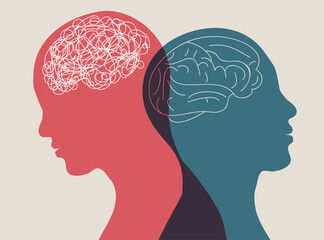
Freud’s lasting contribution was the idea that the mind is divided
Freud’s central insight was not simply that people have secrets. It was that people can be strangers to themselves. He proposed that the mind contains wishes, fears, conflicts, and memories that influence behaviour outside conscious awareness. In his model, symptoms can carry meaning. A slip of the tongue, a repeated relationship pattern, or a strong emotional reaction might express something the person has not fully recognised.
Modern psychology does not accept Freud’s theories as a complete scientific system. Many of his claims are hard to test, and some were based on narrow clinical observations. Yet the broad idea that unconscious processes matter has survived in different forms.
Contemporary research in psychology supports the view that much mental activity takes place outside conscious thought. People can show implicit biases, form emotional associations, avoid painful memories, and repeat patterns without clear awareness of why they do so. This does not prove Freud right in every detail. It shows that his major question remains relevant: what moves human behaviour beneath the surface?
Freud also helped make inner conflict central to psychological life. People can want and fear the same thing. They can love someone and resent them. They can hold moral beliefs while acting against them. This idea of conflict gives psychology a language for contradiction, which is essential when analysing prejudice.
Racism and sexism often appear as systems of belief, law, and culture. They are also emotional systems. They can involve fear, envy, disgust, shame, dependency, and denial. Psychoanalytic ideas are useful not because they replace social and historical analysis, but because they can add a layer of understanding about why prejudices feel so powerful and resistant to evidence.
Freud’s theories also carried sexist assumptions
Freud challenged some social taboos by speaking openly about sexuality, childhood, fantasy, and repression. Yet his work also reinforced damaging ideas about women.
His theory of psychosexual development often measured female development against male development. Concepts such as “penis envy” framed women’s psychological lives through a sense of lack. Freud sometimes described femininity as more passive and less morally developed than masculinity. These claims reflected patriarchal ideas rather than reliable evidence about women’s minds.
His clinical work also raises concerns. The famous case of Dora, a young woman who ended treatment after a short period, is often discussed as an example of how Freud could interpret a woman’s distress through his own assumptions about desire. Rather than fully centring her account of male pressure and family dynamics, Freud’s interpretation placed heavy weight on unconscious sexual wishes. Later readers have questioned whether the analysis gave enough moral and social weight to her experience.
Freud’s views on “hysteria” were also linked to older medical traditions that pathologised women’s bodies and emotions. Although Freud moved away from crude biological explanations and towards psychological meaning, he did not fully escape the sexist framework around him.
This matters because theories shape what clinicians, scholars, and societies notice. If a theory assumes that women are defined by lack, envy, or passivity, it can misread anger as neurosis, ambition as imitation, and resistance as denial. A critical reading of Freud must ask not only what he discovered, but also whose experience he distorted.
The value of Freud today lies partly in reading him against himself. His own attention to repression, projection, and unconscious conflict can help explain the prejudices within his theory. In that sense, psychoanalysis can be used to critique Freud as well as inherit from him.
Projective identification explains how unwanted feelings get placed in others
Projection is one of the better-known defence mechanisms in psychoanalytic thought. In simple terms, a person rejects a feeling, desire, or trait in themselves and perceives it in someone else. A person who feels hostile may accuse others of being hostile. A person who feels tempted to cheat may become obsessed with other people’s dishonesty.
Projective identification goes further. The term is most closely associated with Melanie Klein and later psychoanalytic thinkers, not Freud himself. It describes a process in which a person unconsciously projects unwanted parts of the self into another person and then relates to that person as if the projection were true. In some accounts, the recipient may even be pressured into feeling or behaving in ways that match the projection.
This is easiest to see in personal relationships.
A parent who cannot tolerate their own anger may repeatedly call a child “difficult” or “aggressive”. The child, treated as a problem, may become anxious, defensive, or angry. The parent then says, “See, you are always angry.” The projection has shaped the relationship.
A partner who feels dependent may accuse the other person of being needy. The accused partner may start asking for reassurance because the relationship feels unstable. The first partner then treats that need for reassurance as proof.
A group can do something similar. The traits that a community fears in itself can be assigned to an outsider group. Once projected, those traits may appear obvious to those who share the prejudice, because they are no longer examining reality. They are defending against self-knowledge.
Projective identification is not a full explanation of prejudice. Racism and sexism are also built through institutions, laws, economic interests, education, media, and political power. But the concept helps explain why prejudice can be emotionally charged. It shows how hatred can protect a fragile self-image.
Racism can turn disowned fear, shame, and aggression into accusation
Racism often presents itself as a judgement about others. Psychoanalytic thinking asks a further question: what does that judgement defend against?
A person may feel aggressive impulses but cannot accept them as their own. Instead, they describe a racialised group as violent, threatening, or dangerous. The accusation does not come from neutral observation. It helps the person feel innocent. Their own aggression appears to belong elsewhere.
A society may deny its history of exploitation. Rather than facing guilt or responsibility, it may portray the harmed group as ungrateful, primitive, or morally suspect. The projection protects a national self-image. The group that was injured becomes imagined as the source of disorder.
A person who feels insecure about status may project dependency onto an immigrant community, claiming that “they take” or “they demand”, even while the speaker depends on social systems, inherited advantage, or underpaid labour. The projection turns dependence into blame.
A person who feels envy may accuse a minority group of unfair success. Instead of recognising resentment or fear of failure, the person imagines a hidden conspiracy, special treatment, or illegitimate advantage. The projected envy becomes a story about corruption.
These examples do not suggest that every racist belief comes from a single private feeling. Racism works through collective narratives. It is taught, repeated, rewarded, and embedded in institutions. Yet unconscious defences can make those narratives feel compelling. Projection gives prejudice its emotional grip.
Projective identification can also help explain why racist stereotypes often contradict each other. A group may be described as lazy and as stealing jobs, weak and as threatening, inferior and as secretly powerful. These contradictions make little sense as evidence-based claims. They make more sense as containers for shifting anxieties. The target group becomes a screen on which different fears can be displayed.
This pattern also appears in everyday life. Someone who feels shame about their own lack of control may mock another group as uncivilised. Someone who fears their own vulnerability may admire harshness and call compassion weakness. Someone who struggles with dependency may attack people seeking refuge, as if need itself were shameful.
The projected trait does not have to be accurate. It only has to be useful to the defence.
Sexism on projection and denial
Freud’s sexist assumptions can be examined through the same lens. Patriarchal cultures often project weakness, emotionality, dependency, and irrationality onto women. Men are then encouraged to disown those traits in themselves. The result is a distorted emotional economy: women carry the feelings that men are not permitted to acknowledge.
For example, a man who fears his own vulnerability may ridicule women as overemotional. This allows him to avoid his own sadness, need, or fear. If a woman responds with anger, he may treat that anger as proof that women are unstable. His projection shapes the interaction and then confirms itself.
A workplace or public institution may claim that women are “too emotional” for leadership while tolerating anger, pride, and rivalry from men as signs of strength. The issue is not emotion itself. The issue is whose emotion receives legitimacy.
Freud’s own theory sometimes reflected this pattern. By treating male anatomy and male development as the norm, he framed female difference as deficiency. This made women’s experiences appear secondary, mysterious, or incomplete. Later feminist psychoanalytic thinkers challenged this view by asking how gender roles shape the unconscious. They did not simply reject the unconscious. They questioned the patriarchal assumptions attached to it.
Sexism also projects sexual responsibility onto women. A man may disown his own desire and describe a woman as seductive, manipulative, or dangerous. This defensive move has a long history. It shifts responsibility away from the person who desires and places blame on the person desired. In extreme forms, it justifies control, harassment, or violence.
This is why a critical approach to Freud matters. Some Freudian ideas can reveal how sexism works, while some Freudian claims reproduce sexism. The task is not to preserve the theory untouched. The task is to separate insight from prejudice.
Freud’s legacy calls for critical use, not blind loyalty
A balanced view of Freud requires intellectual discipline. It is too simple to treat him as either a heroic founder or an outdated relic. His work helped build a language for unconscious life, repression, defence, dreams, conflict, and transference. At the same time, many of his claims about women, sexuality, and development need revision or rejection.
Modern psychology uses a wide range of methods that Freud did not have. Experimental research, developmental studies, neuroscience, trauma theory, feminist theory, critical race theory, and social psychology all challenge and enrich psychoanalytic thinking. No single framework can explain the whole person, and no theory should be protected from moral scrutiny.
Projective identification remains useful because it links the personal and the social. It helps explain how people defend themselves against shame, fear, dependency, aggression, or envy by locating those feelings in others. When this process attaches to gender or race, it can support harmful social myths.
The concept also invites self-examination. Prejudice is rarely experienced from the inside as hatred without reason. It often feels like certainty, disgust, moral concern, or common sense. That is what makes it dangerous. The unconscious can make a defence feel like truth.
A mature reading of Freud’s legacy asks difficult questions:
What did Freud make possible for psychology?
Where did his culture limit his vision?
Which psychoanalytic ideas still help us understand human behaviour?
Which ideas carry sexist or otherwise harmful assumptions?
How do unconscious defences support racism, sexism, and other forms of exclusion?
These questions do not weaken psychology. They strengthen it.
Freud’s most enduring contribution may be the demand to look beneath the surface. Applied to Freud himself, that demand becomes a form of critique. His work teaches that hidden assumptions shape thought. His limitations show that theorists are not exempt from that rule.
The best use of Freud today is not loyalty. It is careful reading, ethical revision, and sustained attention to the ways people flee from unwanted truths by placing them in others. That is where psychoanalytic thought still has power: not as a finished map of the mind, but as a tool for questioning the stories we tell about ourselves and the people we are taught to fear.


Comments