Neurodiversity and the Overlap of ADHD and Autism
Updated: 4 days ago
ADHD and autism are often spoken about as separate categories. In real life, they can be tightly interwoven. A person may crave routine and novelty at the same time. They may notice every sound in a room yet lose track of time. They may need clear structure, then feel trapped by it.
That overlap can be confusing, not because people are inconsistent, but because of labels are sometimes too neat for human brains.
Neurodiversity offers a better starting point. It frames differences in thinking, sensing, focusing and relating as part of normal human variation. That does not mean every challenge disappears. It means support starts with understanding, not judgement.
This article is informational only and is not a substitute for clinical advice or assessment.

Why ADHD and autism are increasingly discussed together
For a long time, ADHD and autism were treated as separate paths. Clinicians, schools and families often looked for one explanation rather than several. That shaped how people were assessed and supported.
Today, there is much wider recognition that a person can be both autistic and ADHD. Diagnostic systems now allow both diagnoses to be given together, and many adults are discovering this overlap later in life after years of being described as “too much”, “too sensitive”, “gifted but scattered”, “antisocial”, “lazy” or “difficult”.
Those labels often hide the real pattern.
ADHD is commonly linked with:
difficulty regulating attention
impulsivity
restlessness or internal hyperactivity
challenges with planning, time and organisation
strong interest in novelty or stimulation
Autism is commonly linked with:
differences in social communication
sensory sensitivities or sensory seeking
strong need for predictability
deep, focused interests
repetitive movements, routines or patterns
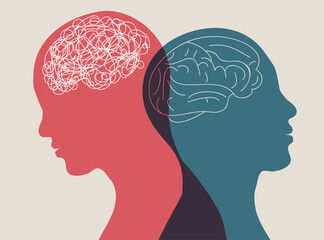
When both are present, traits can interact in ways that do not fit simple descriptions. An autistic person may need sameness to feel safe, while ADHD pushes them towards change and stimulation. The result can feel like an internal tug of war.
A child may build an elaborate routine around getting ready for school, then become distracted halfway through. An adult may plan a quiet weekend to recover, then feel painfully under-stimulated by Saturday afternoon. Someone may love their specialist interest deeply, but struggle to begin the next step because executive function is overloaded.
The overlap matters because support designed for just one profile can miss the whole person.
Where ADHD and autism can look similar
ADHD and autism can appear alike from the outside, even when the underlying reasons differ. This is one reason people may be misread or only partly understood.
A person who does not respond when spoken to might be absorbed in thought, overwhelmed by sound, unsure how to answer, or unable to shift attention quickly. The behaviour looks the same. The cause may not be.
Here are some areas where the two can overlap.
Area of life | How it may show up |
Attention | Deep focus on preferred topics, difficulty switching tasks, seeming not to listen |
Sensory processing | Avoiding noise, seeking movement, noticing details others miss |
Emotional regulation | Big reactions, shutdowns, irritability, intense joy or frustration |
Social interaction | Interrupting, missing cues, avoiding small talk, needing recovery time |
Daily routines | Struggling with transitions, losing things, needing reminders or visual supports |
The overlap becomes clearer when looking at everyday situations.
Attention can be intense or scattered.
Autistic focus may look like becoming deeply absorbed in a subject, pattern or activity. ADHD focus can also become intense, especially when something is interesting, urgent or rewarding. Both can make it hard to stop, shift or respond to outside demands.
Sensory needs can be complex.
A person may hate unexpected noise but seek loud music they can control. They may avoid scratchy clothing yet enjoy deep pressure. They may need movement to think, but feel distressed in a chaotic environment.
Social differences are often misunderstood.
Someone with ADHD may interrupt because a thought feels urgent or may speak quickly when excited. An autistic person may communicate in a direct style, miss implied meanings or find unstructured conversation tiring. When both are present, the person may be socially eager and socially exhausted at the same time.
Emotions may arrive fast and strongly.
ADHD can make emotional shifts feel sudden. Autism can involve intense distress when demands, sensory input or uncertainty build up. Together, this can look like overreacting to others, when the person is actually overloaded.
These shared features do not make ADHD and autism the same. They show why careful listening matters.
Where the needs can pull in different directions
The intersection of ADHD and autism can create genuine tension. These are not contradictions in character. They are competing needs.
One part of the person may want predictable routines. Another part may resist repetition. One part may crave social connection. Another part may dread the sensory and communication load that comes with it.
This can affect home life, school, work, relationships and self-esteem.
Routine can help and irritate at the same time
Many autistic people benefit from predictability. Clear plans reduce uncertainty and lower stress. ADHD can make those plans hard to follow, especially when motivation drops or distractions appear.
A rigid routine may feel calming at first, then become boring or impossible to maintain. A flexible routine may feel easier to follow, but too vague to feel safe.
A useful middle ground is often structured flexibility. That could mean:
a morning checklist with optional order
a weekly plan that includes blank space
two acceptable meal options rather than one fixed meal
reminders that signal transitions early
routines built around anchors, such as waking, meals and bedtime
The goal is not perfect consistency. The goal is enough predictability to reduce stress, with enough choice to reduce resistance.
Novelty can support focus but increase overload
ADHD brains often respond well to interest, challenge and change. New tasks can create energy. Novel environments can boost attention.
Autistic brains may find too much change costly. New places, unclear expectations and unfamiliar people can drain capacity quickly.
This can create a cycle. A person seeks novelty because they feel restless, then becomes overstimulated and needs to withdraw. After recovery, the restlessness returns.
Support may involve planned novelty rather than constant spontaneity. For example, trying a new café at a quiet time, changing a walking route but keeping the same start point, or exploring a new interest in a familiar space.
Special interests and ADHD interests can feel different
Autistic special interests may be long-lasting, meaningful and deeply regulating. ADHD interests may arrive with intense energy, then shift when the novelty fades. Many people experience both.
This can lead to guilt. A person may wonder why they cannot stay with something they loved last month, or why one interest remains central for years while others disappear.
A kinder approach is to see interests as information. Some provide identity and comfort. Some provide stimulation and learning. Both can be valid.
Why people are missed, misread or diagnosed late
Many people with both ADHD and autism are not recognised early. Some are diagnosed with one and not the other. Some receive anxiety or depression diagnoses before anyone considers neurodevelopmental differences. Anxiety and low mood can be very real, but they may also grow from years of unsupported sensory stress, social confusion and executive function strain.
Several factors can contribute.
Masking can hide visible signs.
Masking means consciously or unconsciously hiding traits to fit in. A person may force eye contact, copy social behaviour, suppress movement, rehearse conversations or push through sensory distress. This can make them seem “fine” until they burn out.
Stereotypes narrow what people look for.
ADHD is often imagined as obvious hyperactivity. Autism is often imagined as social withdrawal or a narrow set of behaviours. These stereotypes miss many people, including those who are quiet, academically strong, socially motivated, creative or skilled at copying expectations.
Traits can cancel each other out on the surface.
Autistic caution may reduce visible impulsivity. ADHD novelty-seeking may hide a need for routine. Strong verbal ability may hide social confusion. Good grades may hide severe effort and exhaustion.
Gendered expectations can affect recognition.
Girls and women, and people raised with strong pressure to be compliant, may be more likely to internalise distress or mask traits. Boys and men can also be missed, especially if their presentation does not match expected patterns. Non-binary people may face added barriers when services rely on narrow assumptions.
Adults often have years of coping strategies.
By adulthood, many people have built complex systems to survive. They may avoid certain places, choose specific jobs, rely on reminders, script conversations or recover in private. These strategies can be useful, but they can also hide the level of effort required.
A late diagnosis can bring mixed feelings. Relief, grief, anger and validation can all appear. Some people mourn the support they did not receive. Others feel a new sense of permission to stop forcing themselves into unsuitable moulds.
What support looks like when both are part of the picture
Support works best when it responds to the actual profile, not a textbook version of ADHD or autism. The most useful question is often simple: what is making this task, place or interaction hard?
For daily life, support may involve:
reducing sensory load
making tasks visible
building transition time
creating routines with choice
using reminders without shame
allowing movement and rest
communicating clearly and directly
breaking tasks into smaller starts
Good support also looks at energy. Many people can do a demanding task once, but not repeatedly without cost. Capacity changes with sleep, stress, hormones, illness, sensory input and social load.
At school or university, support might include quiet spaces, written instructions, extra processing time, predictable routines, movement breaks and clear deadlines. For children, adults should avoid treating behaviour as wilful before checking for overload, confusion or unmet sensory needs.
At work, helpful adjustments may include written follow-ups, flexible start times where possible, noise reduction, clear priorities, fewer last-minute changes and permission to use focus tools. A person may thrive in a role that matches their interests and values, then struggle badly in one full of interruptions and vague expectations.
In relationships, the key is often translation. A partner, friend or family member may misread withdrawal as rejection, directness as rudeness, restlessness as lack of care, or a request for clarity as criticism. Naming needs plainly can reduce conflict.
For example:
“I want to listen, but I need to move while we talk.”
“I can come to the event, but I need a quiet exit plan.”
“Please tell me the plan in writing.”
“I am not ignoring you. I am overloaded and need a reset.”
“Surprises are hard for me, even nice ones.”
Professional assessment can help when traits affect daily life, work, education or wellbeing. A good assessment should look beyond checklists and include developmental history, current challenges, strengths, sensory patterns and the possibility of more than one neurodevelopmental profile.
Support does not have to wait for a formal label. Many strategies that help ADHD and autism are low-risk and practical. Clearer routines, kinder expectations, sensory tools, rest and better communication can make life easier whether someone is diagnosed, self-identifying or still exploring.
A more humane way to understand neurodiversity
Neurodiversity does not mean pretending that ADHD and autism are always easy. Many people face real barriers, including exhaustion, exclusion, stigma, executive function problems, sensory pain and mental health strain.
It also does not mean reducing a person to difficulties. ADHD can come with energy, creativity, fast idea generation and strong responsiveness to interest. Autism can come with deep focus, pattern recognition, honesty, precision and intense commitment. These strengths are not guaranteed, and they do not erase support needs. They are part of the whole picture.
The overlap of ADHD and autism asks for nuance. A person can be capable and disabled by their environment. They can need routine and freedom. They can seek connection and need solitude. They can be articulate and still struggle to explain what is happening inside.
The most helpful response is curiosity.
Ask what drains energy. Ask what helps focus. Ask what sensory input feels painful or calming. Ask what kind of structure supports the person without trapping them. Ask what has been mistaken for attitude, laziness or rudeness.
When people are understood through a neurodiversity lens, support becomes less about forcing normal behaviour and more about building a life that actually fits. That shift can reduce shame, improve communication and make space for people to use their strengths without paying for them through constant exhaustion.
The takeaway is simple: ADHD and autism can overlap in complex ways, but complexity is not a flaw. With the right understanding, the same person who once seemed inconsistent may finally make sense, to others and to themselves.


Comments